Heritage Story:
Bidayuh Traditional Pregnancy Customs
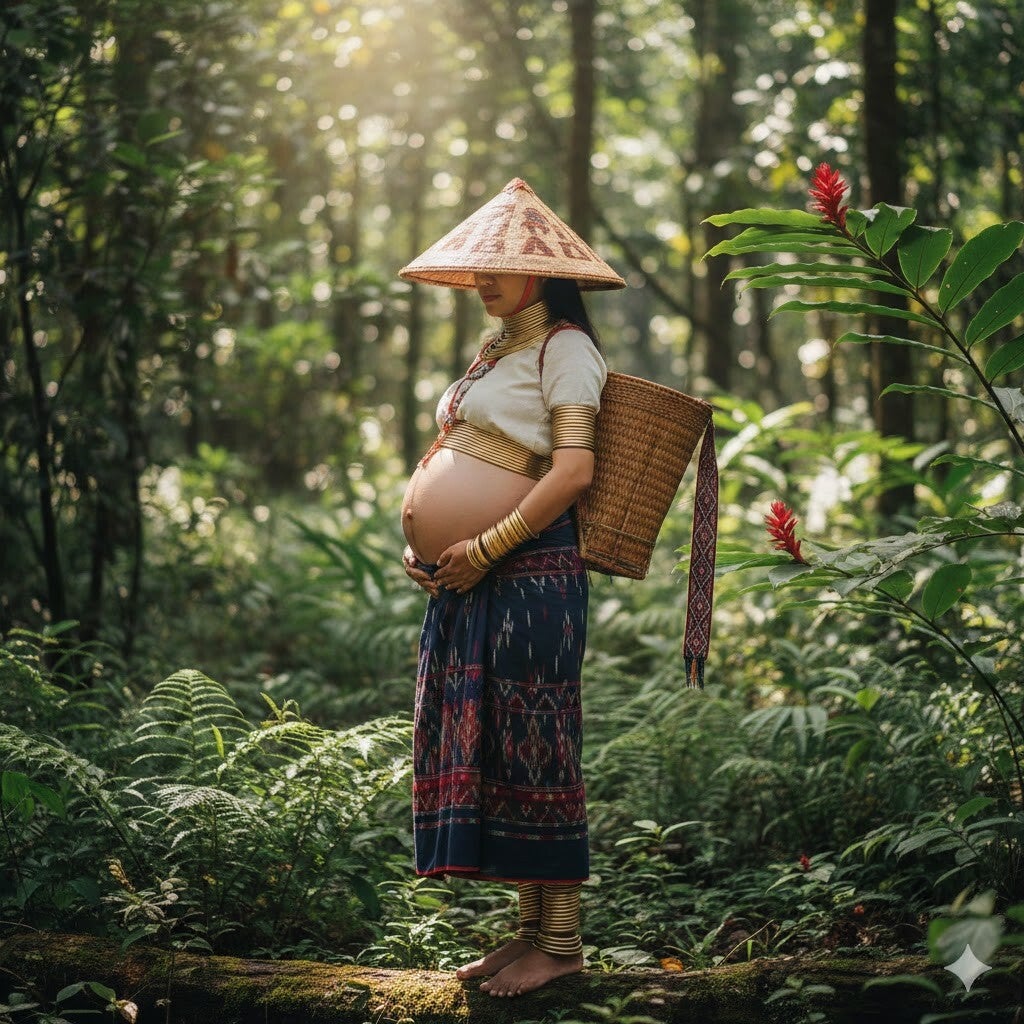
Bidayuh traditional pregnancy customs are an important cultural heritage that shows the community’s beliefs and values. These customs were developed to ensure the well-being of both the pregnant women and their baby. These customs also help to protect them from physical and spiritual harm. This knowledge was traditionally passed down orally from the elders and experienced midwives.
One significant pregnancy ritual practiced by the Bidayuh community is known as Birayang Ite, or the stomach-treating ceremony. This ritual is performed once a woman is confirmed to be pregnant and is conducted only by an experienced traditional midwife. During the ceremony, spells are recited to encourage the healthy growth of the baby. The pregnant woman’s body is wrapped with a cloth to remove negative influences before she is dressed in clean clothing and laid down facing the ceiling. The midwife then rubs turmeric and coconut oil onto the woman’s stomach and scatters turmeric rice while chanting protective spells.
In addition to ritual practices, several taboos are observed throughout the pregnancy. Pregnant women and their spouses are discouraged from stealing, as it is believed the child may inherit dishonest traits. Next, certain foods such as deer meat, are refrained during pregnancy due to beliefs that they may affect the baby’s behaviour or complicates childbirth. Pregnant women are also adviced not to go out during twilight to avoid disturbances from spirits known as Umot Sanja. Other taboos include avoiding contact with individuals who have skin diseases, abstaining from blocking holes or drains, and not drying water sources. These actions are believed to cause harm during pregnancy or delivery.
Today, these customs are increasingly endangered due to modern medical practices and urbanisation. Bidayuh pregnancy customs may disappear as fewer young people learn or practice them, unless they are properly documented.
"Preserving these traditions is crucial for maintaining our cultural identity and ensuring that younger generations understand the practices that shaped maternal care in the past."
Heritage Hub, Sarawak
Create Your Own Website With Webador